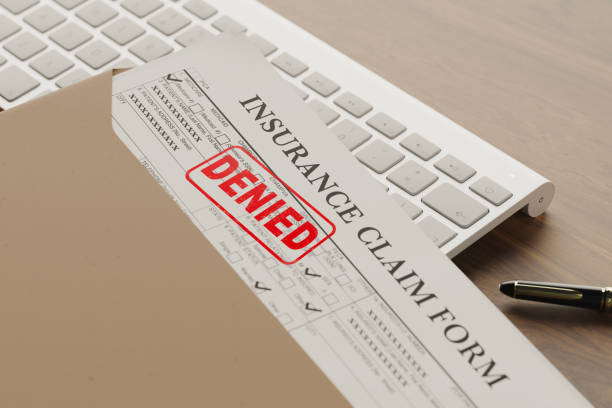
A Denial Is Not Final — Here Is What to Do Next
You filed your insurance claim after your Florida home or business was damaged. You documented the loss, submitted the paperwork, and waited. Then the letter arrived — your insurance company denied my claim. If you are staring at that letter right now, the most important thing you need to know is this: a denial is a decision, not a verdict. And in Florida, you have the right to fight it.
Republic Loss Adjusters is a licensed Florida public adjusting firm. We review denied claims, prepare formal rebuttals, and fight for the full settlement your policy provides. Our fee is a percentage of what we recover — no recovery, no fee.
Why Florida Insurance Companies Deny Claims
Florida carriers deny claims using a small set of recurring arguments. Understanding which one applies to your situation tells you exactly how to respond.
- Disputed causation — The carrier argues damage was not caused by a covered event. Most common on mold, water, and wind claims.
- Policy exclusion — The carrier cites specific policy language claiming the damage type is excluded from coverage.
- Late reporting — The carrier claims you failed to report the damage within the required timeframe.
- Insufficient documentation — The carrier argues the claim was not supported by adequate evidence of loss or cause.
- Policy lapse — The carrier claims coverage was not active at the time of loss.
Step 1 — Get the Full Denial in Writing
Request the complete written explanation of denial from your carrier immediately. Florida law requires insurance carriers to provide a specific written statement of every ground for denial. Read every line and note every policy provision cited.
Step 2 — Pull Your Policy and Read It
Your insurance policy is a contract. The carrier’s interpretation of that contract is not always correct. Pull your declarations page and read the specific exclusion or condition the denial letter cites. Carrier adjusters frequently misapply exclusion language or apply it to situations the exclusion was not designed to cover.
Step 3 — Get Independent Documentation
Do not rely solely on what the carrier’s adjuster documented. Hire independent professionals to assess the damage — a licensed contractor, structural engineer, or industrial hygienist depending on the loss type. This independent documentation is the foundation of any successful denial rebuttal.
Step 4 — Know Your Florida Legal Rights
Florida law provides specific policyholder protections most homeowners never know about. You have the right to a written explanation of denial, the right to request the carrier’s claim file, the right to appraisal when the dispute involves the amount of loss, and the right to mediation through the Florida Department of Financial Services at no cost.
Florida’s statute of limitations for breach of insurance contract is generally five years from the date of loss — but your policy may impose shorter internal deadlines. Act promptly.
Step 5 — Hire a Licensed Florida Public Adjuster
A licensed public adjuster represents you — not the insurance company — in the claims process. We analyze your policy, document the loss independently, prepare a formal written rebuttal addressing every denial ground, and negotiate directly with the carrier’s adjuster on your behalf.
Republic Loss Adjusters has successfully reversed Florida insurance denials on hurricane, water, mold, roof, and fire losses throughout Florida. We work on contingency — no fee unless we collect.
What Not to Do After a Denial
- Do not accept the denial as final without having it reviewed by an independent professional
- Do not make permanent repairs before all damage is independently documented
- Do not make verbal agreements with carrier representatives — everything in writing
- Do not wait — Florida policies have specific internal deadlines for disputes
If your Florida insurance claim was denied or underpaid, contact Republic Loss Adjusters for a free claim review. Licensed Florida public adjusters. No recovery, no fee. Call (407) 490-2979.
For information about Florida policyholder rights and the free mediation program, visit the Florida Department of Financial Services.